
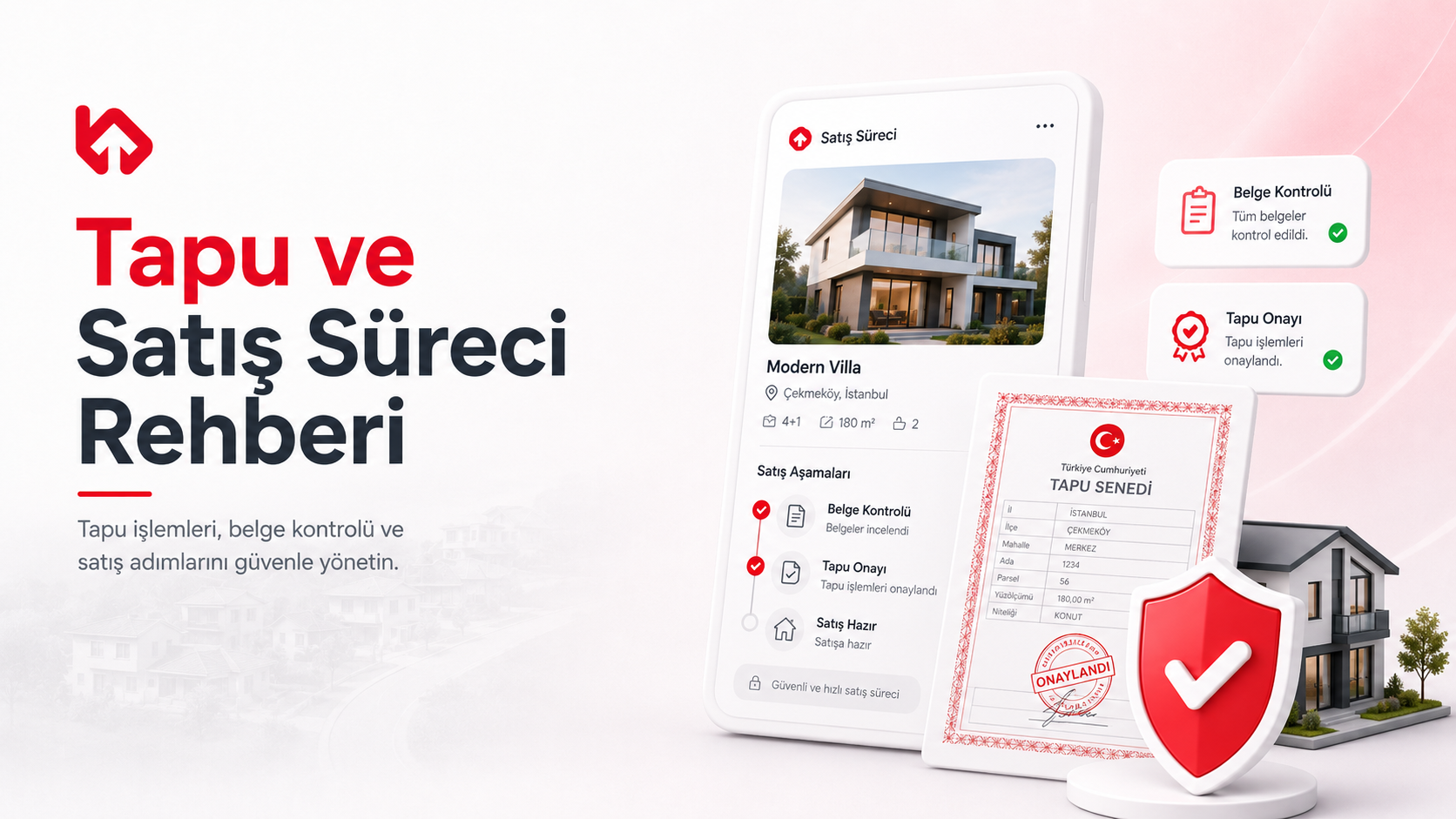
Real estate sales processes consist of multiple stages such as preparation, document review, payment planning, and title deed transfer. As Home.com.tr, we share the key steps to pay attention to throughout the process so that our users can proceed in a more informed, organized, and controlled manner.
Prepare Before the Sales Process
Before the sales process of a property begins, it is important to have the information and documents related to the property ready.
Before the transaction, as much as possible;
- title deed information,
- block/parcel information,
- independent section information,
- identity information,
- DASK policy,
- power of attorney status,
- municipality and zoning records
it is recommended to check details such as these.
In some transactions, additional documents or institutional approval may be required.
Check the Current Status of Title Deed Records
Before the sale transaction, it is important to review the current status of the title deed records related to the property.
Especially;
- mortgage,
- lien,
- injunction decision,
- family residence annotation,
- usufruct right,
- lease annotation,
- lawsuit or legal process records
details that may affect the transaction should be checked.
Title deed records can be verified via;
- e-Devlet,
- Web Tapu System,
- General Directorate of Land Registry and Cadastre
.
Review Shared Title Deed Situations
In properties with shared title deeds, the transaction process may proceed differently.
Especially;
- shareholder structure,
- sale authorities,
- shared use situations,
- pre-emption (right of first refusal),
- ongoing disputes
it is important to evaluate details such as these before the transaction.
Evaluate Appraisal and Technical Checks
In some sales processes, an appraisal report may be requested.
For the property;
- physical condition,
- building permit,
- occupancy permit status,
- compliance with the project,
- technical adequacy
having matters such as these assessed by experts may help the transaction process proceed more smoothly.
Check Zoning and Municipality Information
It is important to review the zoning status and municipality records in the area where the property is located before the transaction.
In some properties;
- unlicensed structure,
- use contrary to the project,
- illegal section,
- transformation decision,
- use restriction
such situations may exist.
Zoning information can be checked through the relevant municipalities or via e-Devlet.
Plan the Payment and Financing Process
It is important to clarify the payment plan before the sales process.
If a housing loan will be used, bank appraisal processes, loan approvals, and payment plans may affect the transaction process.
It is recommended to carefully verify all information during the deposit, down payment, and sale price processes.
For high-value transactions, obtaining legal or financial expert support when necessary may be beneficial.
How Does the Title Deed Transfer Process Proceed?
Title deed transfer transactions are carried out through land registry directorates affiliated with the General Directorate of Land Registry and Cadastre.
The general process mostly consists of the following steps:
- Submitting the title deed application,
- Uploading the required documents to the system,
- Paying the fees and revolving fund charges,
- Scheduling the title deed appointment,
- The buyer and seller completing the transaction at the land registry directorate,
- Finalizing the title deed transfer.
It is recommended to carefully check document and payment information before the transaction day.
What Needs to Be Done After the Transaction
After the title deed transfer is completed, some official and technical procedures may need to be updated.
After the transaction;
- subscription transfers,
- address registration updates,
- insurance procedures,
- municipality notifications,
- dues and management notifications
it is recommended to check processes such as these.
For a More Controlled Process
Home.com.tr aims to enable users to have a more informed and controlled real estate experience through verification systems, security infrastructures, and technology-supported control processes.
Carefully managing the required documents, official records, and payment processes in title deed and sales processes are important parts of a secure experience.