
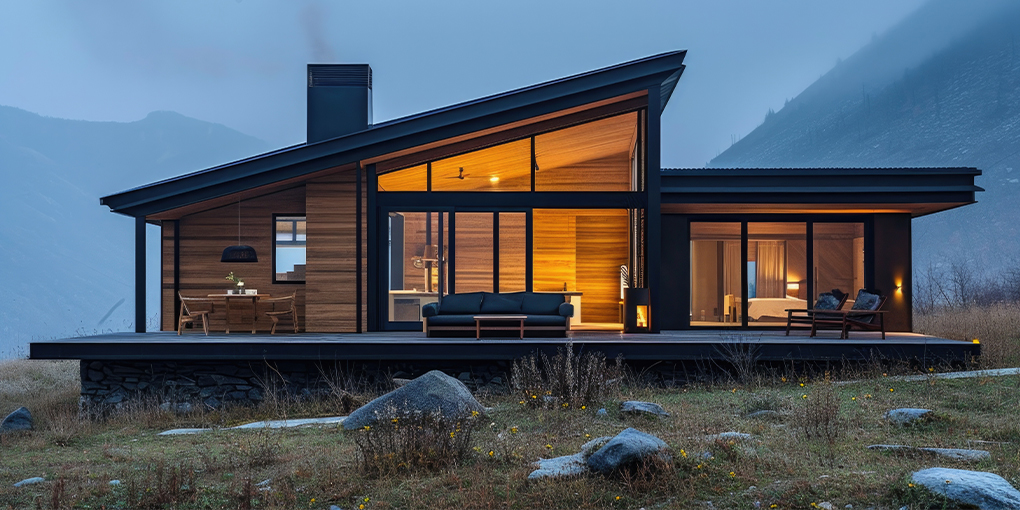
In recent years, our perspective on living spaces has changed significantly. While large square meters, crowded living areas, and long-term housing loans were once seen as symbols of the ideal life, today a simpler, more functional lifestyle intertwined with nature is coming to the forefront.
People no longer want to simply own a house; they also seek freedom, sustainability, and quality of life. The most striking architectural reflections of this transformation are Tiny Houses (Micro Homes) and Prefabricated Homes.
As alternatives to traditional reinforced-concrete structures, these two housing models are attracting more interest every day thanks to their economic advantages, fast installation processes, and eco-friendly structures. So what are the main differences between Tiny Houses and prefabricated homes? Which living model better suits your expectations? Let’s take a closer look together.
Tiny House: For Those Who Don’t Measure Freedom in Square Meters
Tiny Houses are compact and functional homes, generally offering living spaces ranging from 10 to 40 square meters. With every square meter used efficiently, these structures are considered the architectural counterpart of the minimalist living philosophy.
Especially thanks to wheeled and licensed models, their portability is one of the most important features that distinguishes Tiny Houses from traditional homes.
Why Are Tiny Houses So Popular?
The Tiny House movement does not simply mean living in small homes. This trend advocates moving away from unnecessary consumption, living with fewer belongings, and building a stronger connection with nature.
Rising housing costs, the intense pace of city life, and the search for sustainable living are steering many people toward the Tiny House concept.
Especially for remote-working professionals, digital nomads, and those who want to get away from city life, Tiny Houses open the doors to a freer lifestyle.
Biggest Advantage: The Freedom of Mobile Living
Wheeled Tiny House models with an O2 certificate can be considered under caravan status, offering users significant freedom of movement. It is possible to start the day with a sea view today and live a quiet life in the forest a few weeks later. Being able to change your living space according to where you are is one of the strongest aspects of Tiny House culture.
Who Are Tiny Houses Suitable For?
- Those who embrace a minimalist lifestyle
- Those who love to travel
- Remote-working professionals
- Individuals living alone
- Young couples
- Those aiming for lower living costs
In short, Tiny Houses are an ideal option for those who want to invest in a lifestyle rather than just a living space.
Prefabricated Homes: Modern Structures Offering Comfort and Practicality Together
Prefabricated homes are modern housing systems created by assembling modular structural components produced in a factory environment on the land.
They have attracted great interest in recent years thanks to being completed in a much shorter time compared to traditional construction processes and their economical costs.
Moreover, today prefabricated homes are no longer just economical structures. With modern architectural designs, high insulation technologies, and aesthetic solutions, they offer highly comfortable living spaces.
Why Are Prefabricated Homes Preferred?
While the construction process of a traditional home can take months or even years, prefabricated homes can often be ready for use within a few weeks.
This both reduces costs and speeds up the process of becoming a homeowner.
In addition, thanks to the steel construction structures used in modern prefabricated systems, durability and safety standards have reached very high levels.
Biggest Advantage: Spacious and Permanent Living Areas
Unlike Tiny Houses, prefabricated homes can offer much larger living spaces.
It is possible to design either a stylish 60-square-meter country house or a modern 150-square-meter villa. The number of rooms, floor plans, and architectural details can be shaped entirely according to needs.
In addition, thanks to advanced insulation systems used today, living spaces can be created that are cool in summer and warm in winter.
Who Are Prefabricated Homes Suitable For?
- Those who prioritize family life
- Those who want to build a house on their own land
- Those looking for a permanent housing solution
- Those aiming for a comfortable life away from the city
- Those who need a larger living space
However, there is an important issue that those planning to have a prefabricated home built should pay attention to. The zoning status of the land where the structure will be installed must be suitable, and the necessary official permits must be obtained.
Tiny House or Prefabricated Home?
The answer to this question depends entirely on your lifestyle and expectations.
If you are looking for freedom of movement, minimal living, and an experience intertwined with nature, a Tiny House may be more suitable for you.
However, if you are aiming for larger living spaces, family comfort, and a long-term housing investment, prefabricated homes will offer a more advantageous option.
While both models provide strong alternatives to the traditional understanding of housing, they show that a more economical, more sustainable, and freer life is possible.
-
 5 minAesthetics and Comfort in Investment
 -
 5 minHow Are Shared Workspaces (Co-working) Transforming the Housing Sector?
 -
 6 minVertical Architecture or Horizontal Architecture?
 -
 6 minGlamping and Eco-Tourism Investment
 -
 6 minIs Buying and Renovating an Old House (Flips) Profitable? Renovation Cost Calculation Tips
 -
 3 minMay 2026 Rent Increase Rates
 -
 6 minThe Trend of Escaping the Metropolis
 -
 6 minSummer Season Analysis of the Villa Market in the Aegean and Mediterranean