
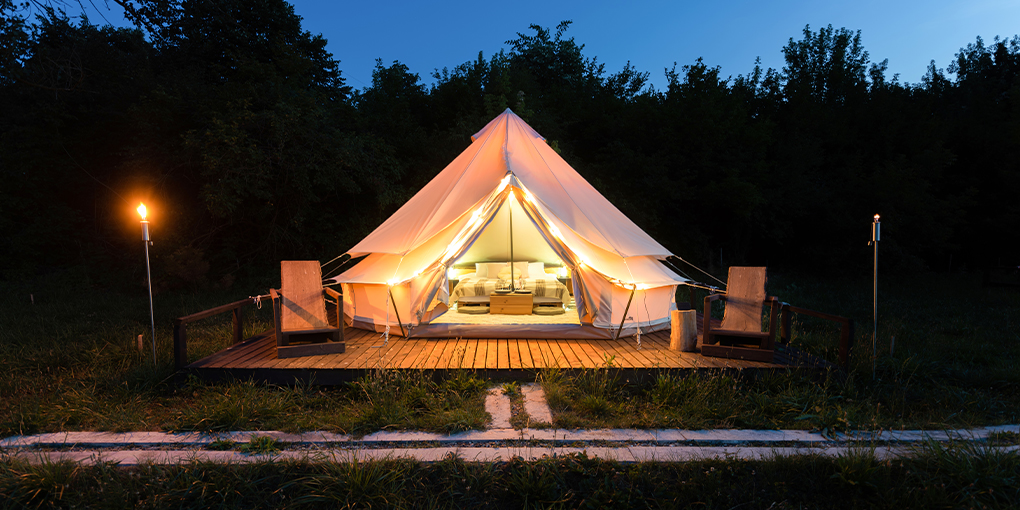
The world of tourism has been undergoing a significant transformation in recent years. Large-scale hotels and crowded resort facilities that once sat at the heart of holidays are increasingly giving way to more personal, more authentic experiences integrated with nature. Today’s travelers are no longer looking only for a place to stay; they are seeking experiences where they can connect with nature, get away from the crowds, and create unforgettable memories.
One of the strongest reflections of this shift in the tourism and real estate sectors is undoubtedly glamping and eco-tourism investments.
This new-generation accommodation model, which combines the simplicity of natural living with modern comfort, creates an opportunity area with high potential not only for guests but also for investors. Thanks to low operating costs, rapidly growing demand, and an experience-focused approach to tourism, glamping facilities have become one of the most notable investment trends of recent years.
So what exactly is glamping? What makes eco-tourism investments attractive? Which criteria should be considered to develop a successful project?
What Is Glamping?
Glamping is a concept formed by combining the English words “Glamorous” and “Camping.” In its simplest definition, it is a new-generation accommodation model that brings the camping experience together with hotel comfort.
However, glamping is not limited to luxury tents.
Today, in many parts of the world;
- Dome houses (Dome House)
- Safari tents
- Treehouses
- Tiny Houses
- Ecological bungalows
- Glamping projects brought to life with different concepts such as glass-fronted nature houses offer guests a comfortable and authentic living experience in nature.
The real value for guests is not so much a holiday spent within four walls, but sleeping under the stars, waking up to a forest view, and reconnecting with nature.
Why Are Glamping and Eco-Tourism Growing So Fast?
The change in people’s holiday habits in the post-pandemic period is seen as one of the main reasons behind this growth.
The desire to get away from crowds, the spread of a sustainable lifestyle mindset, and the rise of experience-focused travel trends increase interest in glamping facilities year after year.
Especially young professionals, digital nomads, and high-income travelers are turning to more authentic and personalized experiences instead of standard hotel stays.
This also creates significant opportunities for investors.
Advantages of Glamping Investments
Lower Initial Cost
Traditional hotel investments require long construction processes, high staffing costs, and substantial infrastructure investments.
In glamping projects, construction costs are much lower. Thanks to modular systems, prefabricated structures, and portable accommodation units, investment costs can be kept at more accessible levels.
Faster Return on Investment
While bringing a hotel project to life can take years, glamping facilities can become operational within a few months.
This shortens the payback period by enabling the investment to start generating revenue earlier.
High Nightly Accommodation Revenue
Glamping guests do not just buy a room; they buy an experience.
For this reason, in a well-designed glamping facility that is immersed in nature, aesthetically strong, and well-conceived, nightly accommodation rates can reach levels similar to many hotels—or even higher.
Rising Demand and Limited Supply
In Turkey, the glamping sector is still in a development phase. While demand is increasing rapidly, the number of qualified, professionally operated facilities remains limited. This creates a significant competitive advantage for the right projects.
4 Critical Rules for a Successful Glamping Investment
1. Choose the Right Land and Analyze the Regulations Thoroughly
At the core of every successful tourism investment is the right location.
However, in glamping projects, scenery or natural beauty alone is not enough. The legal status of the land and the conditions of use are also of great importance.
Before investing, be sure to review in detail factors such as:
- Zoning status
- Tourism use permits
- Protected areas
- Conservation site status
- Forest and coastal regulations
- Infrastructure access
Choosing the right land is the most critical step that determines the future of the investment.
2. Put Sustainability at the Center of the Project
Today’s travelers now prefer brands with high environmental awareness.
For this reason, using sustainable solutions in facility design provides an important advantage not only for the environment but also for the success of the investment.
Prominent practices include:
- Solar energy systems
- Rainwater harvesting systems
- Natural waste management
- Energy-efficient structures
- Use of local and natural materials
This approach both reduces operating costs and increases the brand’s value.
3. Design an Experience, Not Just Accommodation
In a glamping investment, the main product is not the room; it is the experience.
The reason guests choose the facility is often the experience they will have rather than the accommodation unit itself. Therefore, successful projects do not only offer a bed; they offer a story.
For example:
- Open-air cinemas
- Yoga and meditation areas
- Organic farming experiences
- Nature walks
- Campfire events
- Astronomy observation areas
- Local gastronomy workshops
Such activities enrich the guest experience.
Creating shareable and memorable spaces for social media is one of the strongest tools of organic marketing.
4. Prefer Accessible Locations
Being accessible is as important as being in nature.
Especially for glamping facilities preferred for weekend getaways, proximity to major cities can directly affect occupancy rates.
Among the regions that attract the most interest from investors are destinations that offer both nature and transportation advantages, such as:
- Sapanca and Maşukiye
- Bolu and the Abant area
- Kazdağları
- Urla and Seferihisar
- The Fethiye area
- Köyceğiz
- The Kaş and Kalkan hinterland
- The rural areas of Marmaris
The Tourism Model of the Future Is Taking Shape
The transformation in the tourism sector is turning glamping and eco-tourism investments from a temporary trend into a lasting investment field.
People now want to consume less, experience more, and build a stronger connection with nature. This change also influences investment decisions.
Glamping projects developed in the right location, with a sustainable approach and a strong concept, not only offer financial gains but also transform into valuable brands that shape the tourism mindset of the future.
-
 5 minAesthetics and Comfort in Investment
 -
 5 minHow Are Shared Workspaces (Co-working) Transforming the Housing Sector?
 -
 6 minVertical Architecture or Horizontal Architecture?
 -
 6 minIs Buying and Renovating an Old House (Flips) Profitable? Renovation Cost Calculation Tips
 -
 3 minMay 2026 Rent Increase Rates
 -
 6 minThe Trend of Escaping the Metropolis
 -
 6 minSummer Season Analysis of the Villa Market in the Aegean and Mediterranean
 -
 6 minChoosing an Aspect When Buying a Home: Which Aspect Is the Right Choice for You?